

Al-Hijrah ila al-Habasha
Timeframe: Fifth Year of Prophethood
Background and Context
In the fifth year of Prophethood, persecution of the early Muslim community in Makkah had reached a level of sustained and organized violence. Those without powerful tribal protection faced torture, economic exclusion, and in some cases death. The Prophet Muhammad (peace be upon him) did not respond with retaliation. He responded by protecting lives.
He instructed a group of believers to cross the Red Sea and seek refuge in a Christian kingdom known in Arabic sources as al-Habasha (الحبشة). Greek and Latin writers recorded the same region under forms such as Aithiopia and later Abissinia, from which the English name Abyssinia derives. These names refer to the same geographic and ethnic region in the Horn of Africa.
The political authority governing that region in the early seventh century was the Kingdom of Aksum, a Christian state centered in what is now northern Ethiopia and Eritrea. “Aksum” was the name of the ruling kingdom and its capital city. “Al-Habasha” or “Abyssinia” was the broader regional designation used across Arabic, Greek, and Latin sources. The two terms refer to the same territory during this period but reflect different linguistic and political frameworks.
The king of this realm is referred to in Arabic seerah sources as al-Najashi (النجاشي), an Arabicized title corresponding to the Geʿez title Negus or Negashi, meaning “king.” His personal name in early Islamic sources is given as Ashama ibn Abjar. The Prophet described him as a ruler under whom no one was wronged and chose this land specifically for that reason. Early Muslims needed a place where they could worship without torture.
Authenticity note: The identification of al-Najashi as Ashama ibn Abjar comes from later seerah literature. His exact regnal identity cannot be confirmed from contemporary Aksumite records, as the Geʿez royal chronicle of this period is not fully preserved. The characterization of him as a just ruler is consistent across all major seerah compilations.
The First Migration
The first group departed quietly to avoid interception by Quraysh. Classical seerah sources differ on the precise headcount. The figure most commonly cited is approximately eleven or twelve men and four or five women, though some accounts give slightly different numbers.
Among those consistently named across major seerah compilations are ʿUthman ibn ʿAffan and Ruqayyah bint Muhammad, the daughter of the Prophet (peace be upon him). They crossed the Red Sea and reached the shores of Abyssinia because Quraysh had no authority or reach within Aksumite territory, the harassment and persecution stopped for those who made the crossing.
Authenticity note: The exact headcount varies across sources and should not be treated as a precise figure. The names of the individuals included are consistent across Ibn Hisham, Ibn Saʿd, and Ibn Kathir.
The Return and the Rumor
Some of the migrants returned to Makkah after word reached them that the situation with Quraysh had changed and that tensions had cooled. The seerah account most frequently given for why this news spread involves the public recitation of Surah al-Najm by the Prophet Muhammdad (peace be upon him) in Makkah. At the end of the recitation, the Prophet (peace be upon him) prostrated, and several narrations report that members of Quraysh including some who had not embraced Islam also prostrated.
Word traveled across the sea that the conflict had ended and that Quraysh had softened. When the returning migrants arrived back in Makkah, they found that this report had been exaggerated or misunderstood. Persecution had not ended. Some of the returnees were able to re-enter the city under the protection of tribal leaders. Others, finding themselves without safe passage, turned around and made their way back to Abyssinia.
Authenticity note: The prostration at the end of Surah al-Najm is recorded in Sahih al-Bukhari (Book of Sujud al-Quran) and is on firm ground. The reports explaining exactly how news of the prostration was conveyed to the migrants in Abyssinia, and what interpretation they were given, come from seerah literature and vary in chain strength. The core sequence that migrants returned based on a misunderstood report and then found conditions unchanged is consistently described by Ibn Hisham, al-Tabari, and Ibn Saʿd, though fine details of the transmission differ.
The Second Migration
Persecution in Makkah continued and, in some cases, intensified. A larger group of believers undertook a second migration to Abyssinia. Early sources often cite the total at approximately eighty-three men plus a number of women and children, though the precise count varies slightly across historians. This second wave formed the main Muslim community in exile.
The figure who emerged as the spokesperson and leader of this community was Jaʿfar ibn Abi Talib, a cousin of the Prophet (peace be upon him). His role became decisive when Quraysh moved to force the king to deport the Muslims and return them to Makkah.
Authenticity note: The figure of approximately eighty-three men is the most commonly cited number and appears in Ibn Hisham and related compilations. Exact counts differ slightly across sources and should be understood as approximate.
The Quraysh Delegation
Quraysh could not tolerate a protected Muslim community beyond their control. They assembled gifts, carefully selected items known to be valued at the Aksumite court, including goods intended both for the king and for the bishops and church officials around him and sent two envoys to Abyssinia. The names most consistently recorded across the major seerah compilations are ʿAmr ibn al-ʿAs and ʿAbdullah ibn Abi Rabiʿah.
Their strategy was two-pronged. They first attempted to win over the religious advisors at court, hoping to build opposition to the Muslims before they were even heard. Then they approached al-Najashi directly with their accusation: that the Muslim migrants had abandoned the religion of their forefathers and adopted a new creed that was neither the traditional Arab religion nor Christianity. They framed the Muslims as dissidents and troublemakers who should be returned to their own people.
Authenticity note: The names of the two envoys and the general outline of their strategy are stable across seerah accounts. The specific wording of their arguments to the king varies in different narrations and should not be taken as verbatim record.
Jaʿfar ibn Abi Talib Speaks Before al-Najashi
Al-Najashi refused to act on Quraysh’s request without first hearing from the Muslims themselves. This decision was itself significant, rather than accepting the word of the delegation, he insisted on direct testimony. Jaʿfar ibn Abi Talib was chosen to speak on behalf of the Muslim community.
Jaʿfar described their life before Islam. A time he characterized as one of ignorance, injustice, and degradation — the worship of idols, the oppression of the weak, the severing of family ties. He then described what the Prophet had called them to which was the worship of Allah alone, truthfulness in speech, the honoring of family bonds, and the protection of those who could not protect themselves.
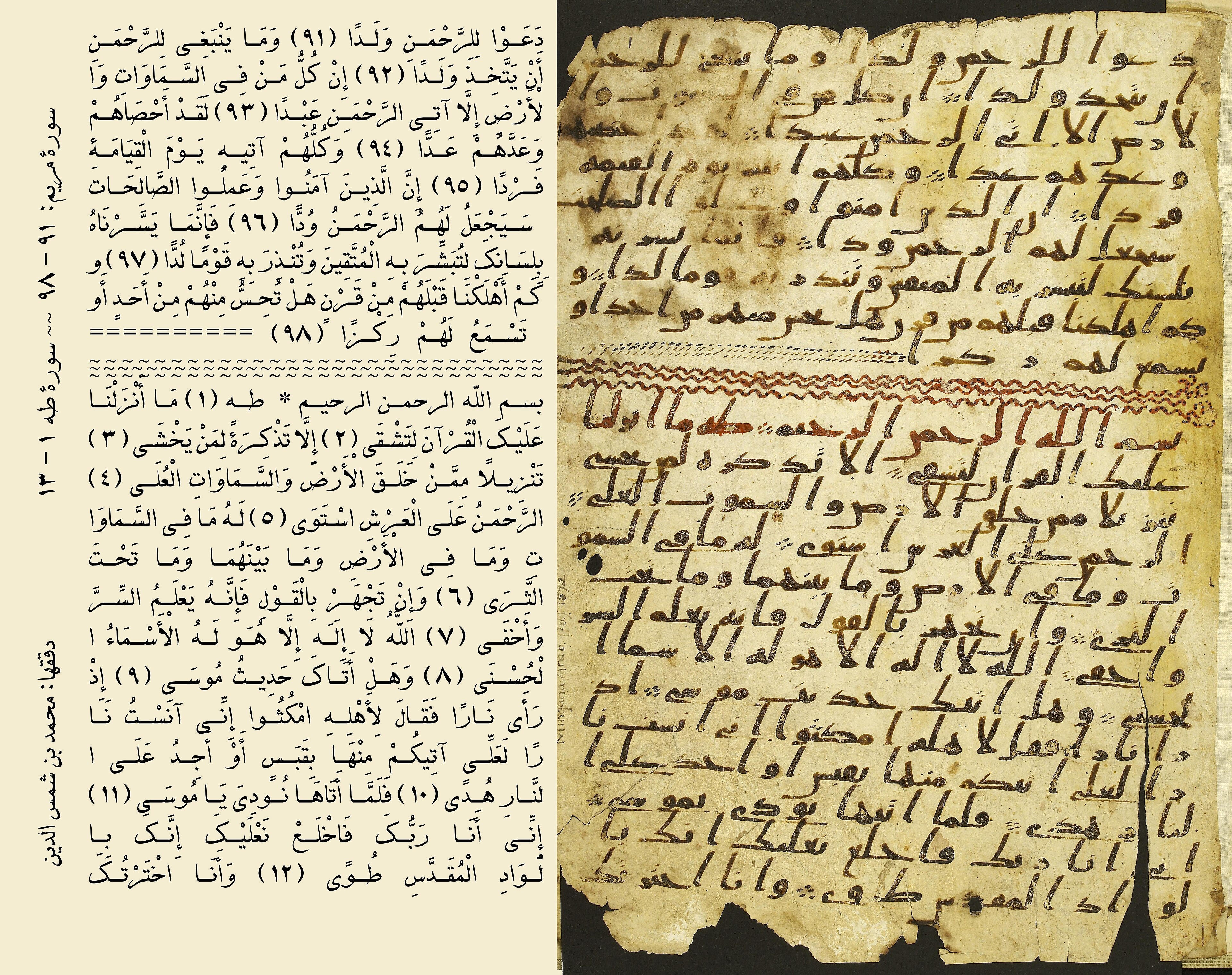
Al-Najashi then asked what had been revealed to them about Jesus and Mary. Jaʿfar recited verses from Surah Maryam, the nineteenth chapter of the Quran, which describes the Virgin Mary and the birth of Jesus (ʿIsa, peace be upon him) in terms of profound reverence. The king and the bishops present were visibly moved. Classical sources report that tears fell as they listened. Al-Najashi ruled that he would not hand the Muslims over to Quraysh. He returned the envoys’ gifts and reaffirmed the protection of the Muslim community.
Authenticity note: The court scene involving Jaʿfar’s speech is one of the most widely transmitted episodes in the seerah and is accepted across mainstream biography literature — Ibn Hisham, al-Tabari, Ibn Saʿd, and Ibn Kathir all include versions of it. The core facts are consistent. The exact wording of the speech is not preserved in a sahih hadith chain; it is a seerah-grade narration. The recitation of Surah Maryam and its effect on the king are part of this same seerah tradition.
The Question of Jesus
