

Marcion of Sinope was one of the most influential and controversial figures in early Christian history. In the middle of the second century, he produced the first known attempt to create a fixed list of Christian scriptures. His version excluded the Old Testament and most other early Christian writings. This decision forced church leaders to respond by defining which books they considered authoritative. The debate that followed played a major role in shaping the New Testament in its present form.[1]
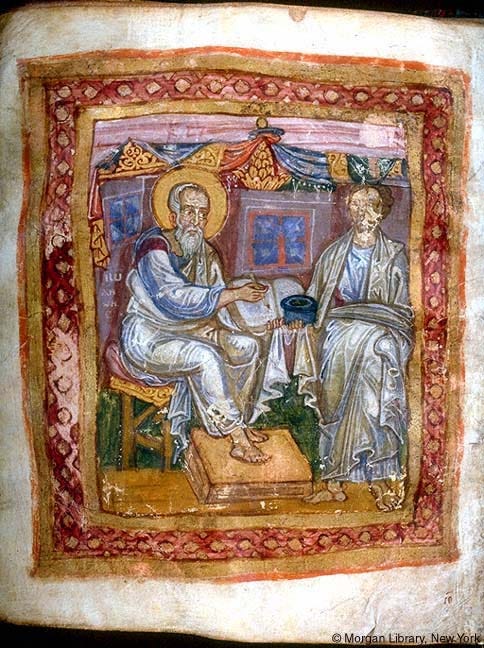
Early Life and Background
Marcion was born around 85 CE in Sinope, a port city on the southern coast of the Black Sea in modern-day Turkey.[2] His birthplace is widely accepted by historians. Early Christian sources, including Tertullian, Irenaeus, and Epiphanius, record that his father was a bishop[3] and that his family was wealthy from the shipping business, enabling him to travel widely and support Christian communities.[4] These details cannot be independently verified, but they fit with what is known of his later life. If accurate, they show that Marcion came from within the heart of the Christian community before rejecting its foundational beliefs.[5]
Arrival in Rome and Early Influence
Marcion arrived in Rome around 140 CE.[6] He gave a large donation, reported as 200,000 sesterces to the Roman church.[7] This gave him influence at first, but his theology and teachings soon led to strong opposition. He began teaching that Christianity should be completely separated from Judaism. This view gained followers but also provoked opposition from those who considered the Hebrew Scriptures foundational to Christian faith.[8] By around 144 CE, he was excommunicated, and his donation was returned.[9]
